Overall maturity distribution
Unweighted
Most assessments cluster around ~50%, with a long tail to both low and high maturity.
This is a single‑page, mobile‑first public report built from 100 synthetic WaterGuide assessments. It demonstrates how your data collection instrument can become an external-facing benchmark and engagement portal.
Most assessments cluster around ~50%, with a long tail to both low and high maturity.
A quick scan of which parts of national water architecture tend to be strongest and weakest.
Where maturity tends to differ by geography (synthetic regions for demo purposes).
High/Medium/Low importance selections aggregated across respondents.
Elements where respondents signal high importance but report weaker effectiveness.
A proxy for decision-making seniority and institutional locus.
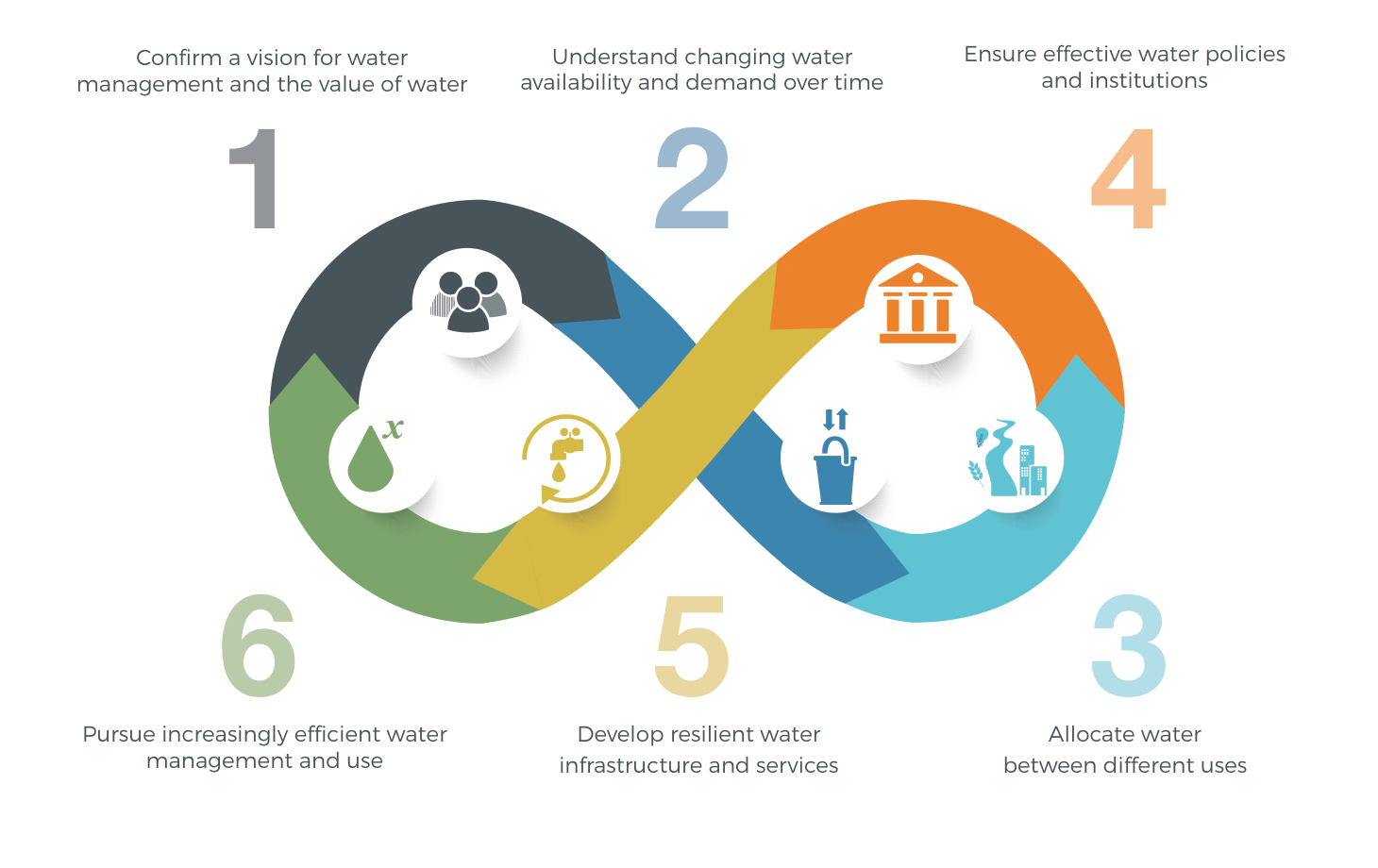
The same six elements, plotted as averages for the filtered subset.
Themes inferred from common low‑maturity priority elements. In a real deployment these can map to platform offerings (peer learning, regional compacts, data standards, financing mechanisms).
Want a defensible benchmark using your real assessment data, plus a facilitation and reform program behind it? We can provide the instrument, analytics layer, and targeted advisory support.
hello@example.com with your firm mailbox.This public benchmark illustrates how WaterGuide self-assessment data can be aggregated into an external-facing snapshot. Results shown here are generated from a synthetic dataset designed to mimic realistic response patterns and are not intended to represent any real jurisdiction’s performance.
In a production benchmark, we recommend publishing a transparent scoring rubric, documenting sampling/response rates, and providing confidence bands where multiple respondents per jurisdiction are available.